The mountains knew her before she knew herself.
Mara woke in the pre-dawn dark the way she always did—all at once, no gradual drift from sleep to consciousness. One moment gone, the next present. A habit from another life, one she'd tried to unlearn but couldn't. Some skills stayed in the muscle memory long after you stopped needing them.
She lay still in the loft bedroom of the converted barn, listening. The house settled around her with familiar creaks. Outside, a barred owl called from the hickory grove, its eight-note question echoing across the hollow. Wind moved through the hemlocks like water, that particular rushing whisper that only came in the hour before dawn. Everything in its place. Everything safe.
She exhaled slowly and let herself sink back into the pillow for thirty seconds of luxury she rarely allowed. The quilt her grandmother had made—the only thing she'd kept from before—weighed warm across her shoulders. Through the skylight above the bed, stars were fading into that particular shade of mountain blue that came just before dawn, the color that made the Smokies look like they were holding their breath.
This was home. Not the place she'd been born, not the life she'd run from, but the one she'd built board by board, decision by decision, morning by morning for the past eight years.
She rose and moved through the barn's open living space in bare feet, stopping at the kitchen window that faced east across the farm. The valley was still draped in fog, thick enough that she couldn't see the lodge yet, only the suggestion of its roofline ghosting through the white. The hemp fields beyond were invisible. But she knew they were there—forty acres of carefully tended plants that represented everything she'd fought to become.
Beyond the fields, she could just make out the dark ridge of Caney Fork, its spine running north toward the Blue Ridge Parkway. In another hour, the sun would hit that ridge and light up the autumn colors just starting to turn—the sourwoods going scarlet, the hickories gold, the maples blood-orange against the evergreens. September in Jackson County was a study in transitions, everything poised between what it had been and what it would become.
Mara filled the kettle and set it on the stove, then stood with her palms flat on the butcher-block counter, breathing in the quiet. She'd rebuilt this barn herself with Caleb Hensley's help, stripping it down to the bones and then bringing it back—salvaged beams overhead, wide-plank floors from a demolished mill in Dillsboro, windows that let in the kind of light that made you believe in clean starts.
The space was spare. No clutter, no photographs, nothing that told stories she didn't want read. A woodstove. A long table she'd made from a single black walnut slab. Books on botany and Appalachian history. A guitar she rarely played. In the corner, the door to the garage bay where she kept the white Jeep Wrangler, the Polaris ATV, and the locked cabinet she tried not to think about.
The kettle sang. She poured water over coffee grounds and waited, watching the sky lighten by degrees.
This was the best hour. Before the world made demands. Before she had to be the woman people expected—the competent farmer, the successful businesswoman, the consultant with all the answers. Before she had to wear the armor of Mara Ellery, self-made and unshakable.
Right now, in this stolen quiet, she could just be tired. She could be forty years old and alone and wondering if she'd ever stop looking over her shoulder. She could be a woman who'd left bodies behind—not literally, though there were nights she wondered if the difference mattered—and built a fortress in the mountains because fortresses were easier than trust.
The coffee was strong and bitter. She drank it black, standing at the window as color seeped into the world.
By the time Mara stepped onto the porch, the fog was lifting.
It didn't disappear all at once. Mountain fog never did. It rose in layers, peeling back like gauze, revealing the land in stages. First the near field with its irrigation lines and equipment shed. Then the hemp rows, six feet tall now and healthy, their serrated leaves dark green against the lighter grass. Then the lodge, its stone chimney and wraparound porch solidifying out of the white.
She pulled on her work boots—Red Wings, broken in and comfortable—and started walking.
The air was cool enough to raise goosebumps on her arms, but she didn't go back for a jacket. September mornings in Cullowhee had a particular quality, something between summer's end and autumn's promise, and she wanted to feel it. Dew soaked the grass, each blade weighted with moisture that would burn off by mid-morning. Somewhere in the distance, the Tuckasegee River murmured its way toward Bryson City, its voice just audible under the birdsong starting up in the woods.
A pileated woodpecker hammered at a dead oak near the tree line. Chickadees called from the undergrowth. The world was waking up around her, and for a moment Mara let herself just stand there and listen—really listen—to a place that had become hers not by birth but by choice.
The farm sat in a natural bowl between two ridges, protected from the worst weather, catching good sun most of the day. Old-timers in Sylva had told her the land had been in tobacco once, then corn, then nothing for twenty years before she bought it. The soil had needed work—amending, aerating, patience. Like everything else worth doing, it had taken time.
Mara moved down the main path between the hemp rows, her eyes scanning automatically. Checking plant health, looking for signs of stress or pest damage, noting which rows would need harvest in the next two weeks. This was the work that had saved her—the dailiness of it, the way it demanded attention to things that were real and growing and utterly indifferent to who she used to be.
In Florida, she'd been brilliant at logistics. Routes and timing, supply chains and distribution networks, the chess game of moving product where it needed to go without getting caught. She'd had a gift for it—reading people, reading situations, seeing three moves ahead. It had made her valuable. Then it had made her dangerous. Then it had nearly made her dead.
Here, she used those same skills to move CBD oil to dispensaries and co-ops, to negotiate contracts with the Eastern Band, to build relationships with farmers who needed help transitioning to hemp. Legal work. Clean work. Work that let her sleep at night, mostly.
She reached the end of the row and stood looking back at her barn. The morning light caught the windows, turning them gold. Eight years ago, this had been a collapsing wreck on twenty acres of abandoned farmland nobody wanted. She'd bought it in cash under her own name—Mara Ellery, which was real, at least—and spent two years living in a camper while she rebuilt everything.
The work had been good for her. Swinging a hammer, running electrical, learning plumbing from YouTube videos and old-timers at the hardware store. She'd blistered her hands and thrown her back out and discovered muscles she didn't know she had. She'd learned the names of trees and wildflowers. She'd learned how to talk to people who'd lived in these mountains for generations, how to earn trust one conversation at a time.
She'd learned that reinvention was possible, but it wasn't the same as forgetting.
The sun cleared the ridge, and suddenly everything was illuminated—the fields, the barns, the lodge, the mountains rising blue and endless beyond. To the west, she could see the higher peaks of the Balsam Range catching the first light, their summits still touched with wisps of cloud. This was the view that had sold her on the property, this sense of being held in the palm of something ancient and patient.
Mara closed her eyes and breathed it in. Woodsmoke from someone's chimney down in the valley. The green smell of growing things. Earth and mist and possibility. The particular scent of a Southern Appalachian morning—damp soil, pine resin, the faint sweetness of joe-pye weed going to seed in the ditches.
This was hers. Not because she'd been born to it, but because she'd claimed it. Because she'd decided that Mara Ellery, hemp farmer and lodge owner, was who she wanted to be. And most days, she even believed it.
She was checking the drip irrigation in the south field when she saw Lily walking toward her from the lodge.
Mara knew immediately something was wrong. Lily moved with purpose, but there was tension in her shoulders, a carefulness in how she picked her way between the rows. And it was barely seven in the morning—Lily didn't usually surface before eight unless there was a problem.
Mara straightened and waited, letting Lily come to her. The younger woman's dark hair was pulled back in a messy ponytail, and she was wearing an oversized cardigan over pajama pants and rain boots. Her face was tight with worry.
"Morning," Mara said evenly.
"We need to talk." Lily glanced back at the lodge, then lowered her voice even though they were alone in forty acres. "Someone came last night. Late. After you'd already gone to bed."
Mara kept her expression neutral, but her pulse kicked up. "Who?"
"A woman. Young—maybe late twenties? She showed up around midnight, no reservation, said she'd heard about the lodge from someone at WCU." Lily wrapped her arms around herself. "Mara, she was terrified. I mean really scared. Bruises on her arms, wouldn't make eye contact, kept watching the driveway like someone was going to follow her."
"Did she give a name?"
"Anna. That's all. No last name, paid cash for three nights, wouldn't fill out the registration form properly." Lily's voice dropped further. "She asked if we had rooms that didn't face the road. Wanted to know about back ways out of the property. Asked if there were any cameras."
Mara filed away each detail, her mind already working. A young woman running from something—or someone. Scared enough to drive to an isolated farm in the middle of the night. Smart enough to ask about exits and surveillance.
"Where is she now?"
"Still asleep, I think. I put her in the back bedroom, the one that faces the woods. She looked like she hadn't slept in days." Lily studied Mara's face. "I didn't know if I should wake you. But Ethan said—"
"You did the right thing."
They started walking toward the lodge together. The sun was higher now, burning off the last wisps of fog. It was going to be a beautiful day—clear and warm with that particular mountain light that made everything sharp-edged and possible. The kind of day that usually made Mara grateful she'd ended up here, in this valley, in this life.
"Ethan's worried," Lily said quietly. "He thinks maybe we should call the sheriff."
Mara didn't answer right away. They crossed the gravel drive and climbed the steps to the lodge's wraparound porch. She could smell coffee and something baking—Lily had probably been stress-cooking, which was her tell when something had rattled her.
The lodge looked solid in the morning light, its river stone chimney rising two stories, its cedar siding weathered to silver-gray. Mara had modeled it after the old CCC lodges in the national forests—built to last, built to shelter, built to feel like it had grown out of the land itself. Six bedrooms upstairs, common areas down, a commercial kitchen Lily had outfitted with equipment from a restaurant supply store in Asheville.
"Did she seem drunk? High?"
"No. Just scared. And exhausted."
"Hurt? Besides the bruises?"
"I don't think so. But she wouldn't let me really look."
Mara leaned against the porch railing and gazed out at the mountains. She knew what Ethan was thinking. Call the authorities, follow protocol, cover your ass. It was the sensible thing. The safe thing.
It was also the thing that might get this woman killed, if whoever she was running from had the right connections.
Mara had been where Anna was. Not the same circumstances, but the same feeling—that moment when you realize you're out of options, out of allies, out of road. When you have to trust a stranger because the alternative is worse.
"No sheriff," she said.
Lily nodded slowly. She'd known Mara long enough to recognize the tone that meant the decision was final. "Okay. So what do we do?"
"We let her sleep. When she wakes up, I'll talk to her. Find out what she needs." Mara pushed off the railing. "In the meantime, keep things normal. If anyone asks, she's here for a CBD seminar. You never saw the bruises."
"Mara—"
"I know." She met Lily's eyes. "I know what I'm asking. If you're not comfortable with it—"
"It's not that." Lily's face softened. "I just worry about you. You take on other people's trouble like it's your job."
"Maybe it is."
Inside, the lodge was warm and smelled like blueberry muffins. Ethan was in the kitchen, pouring coffee. He looked up when they entered, his weathered face creased with concern.
"She tell you?" he asked Mara.
"She told me."
"And?"
"And we're going to help her." Mara accepted the mug he offered and wrapped both hands around it. "However we can."
Ethan and Lily exchanged a look—the wordless communication of couples who'd been together long enough to have full conversations in glances. Finally, Ethan nodded.
"All right. But if this gets dangerous—"
"Then we'll deal with it." Mara took a sip of coffee. It was good—strong and dark with just a hint of cinnamon, the way Lily always made it. "Has she said anything else? Made any calls?"
"No calls," Lily said. "But when I was showing her to the room, I saw her pull apart her phone. Like, took the back off and pulled out the battery. Then she wrapped it in a towel and stuffed it in a drawer."
Smart, Mara thought. Someone had taught this woman how to run. Or she'd learned the hard way.
"Okay. Let me know when she wakes up. Until then, business as usual." She drained the coffee and set the mug down. "I need to finish checking the south field, then I have a call with the Cherokee council about the new strain trials. Lily, you have that group coming in for the herbal workshop this afternoon, right?"
"Three o'clock. Eight people."
"Good. Ethan, can you check the irrigation timers? I think the northeast section might need adjustment."
They moved into their roles smoothly, the practiced choreography of people who worked well together. But Mara could feel the new weight in the air, the presence of a stranger's fear settling over the property like an extra shadow.
She walked back outside and stood on the porch, looking toward the bedroom where Anna slept. The window was dark, curtains drawn. Whoever you are, Mara thought, I hope you chose the right place to run.
Because she knew better than anyone that the mountains kept secrets well. But they also had a way of bringing the past back around, no matter how far you ran or how carefully you hid.
The land remembered. It always did.
And Mara Ellery, who'd built a new life on top of an old one, who'd learned to sleep without nightmares and live without looking back, felt the first tremor of something shifting. Some fault line in the careful world she'd constructed, starting to give way.
She went back to work. Because work was what you did when you couldn't control what was coming. You tended what you could—the plants, the land, the people who trusted you. You did the next right thing and hoped it was enough.
But she also checked her phone, scrolling through the contacts until she found the one she hadn't called in the last few weeks. A lawyer in Sylva, Elias. Former DEA. A man who understood that some kinds of trouble couldn't be handled through official channels. A man that both appealed to her and scared her. Did he know her past or was he as attracted to her as she was to him? What would happen if she told him? What would happen if she didn't?
The sun climbed higher. The fog burned away completely. In the lodge, a terrified woman slept behind locked doors, and Mara Ellery went about the business of being exactly who she'd worked so hard to become—competent, successful, unshakable.
And if her hand trembled slightly as she tested the moisture levels in the soil, if she found herself scanning the tree line more than usual, if she felt the old instincts waking up after eight years of hibernation—well. Some things you never really unlearned.
Some things you just learned to live with.
The mountains watched, ancient and patient. The hemp grew. The lodge waited.
And somewhere in the back bedroom, Anna dreamed whatever dreams people had when they'd run as far as they could and had nowhere left to go.
Mara would help her. Because that's what the lodge was for—refuge for people who needed it, no questions asked. Because someone had helped Mara once, when she'd needed it most. Because walking away from someone in trouble wasn't something she knew how to do anymore, even when the smart money said she should.
Even when every instinct from her old life was whispering that this was how it started—the unraveling, the exposure, the past catching up.
She ignored the whispers and went back to work.
The land didn't judge. It just grew what you planted and weathered what came.
And Mara Ellery, who'd planted herself in these mountains eight years ago and grown roots deep enough to hold, decided that whatever storm was coming, she'd weather it the same way she'd weathered everything else.
One morning at a time.
One choice at a time.
One woman in trouble at a time.
The sun rose higher. The work continued.
And in the back bedroom of the lodge, behind drawn curtains and locked doors, Anna slept on.
I've never posted an excerpt before I'm done and I have a few starts I've filed away unfinished... be warned. I need a title too.
Smoky Mountain tales.🐾 Book Signing Event – Waynesville, NC! 🐾📚
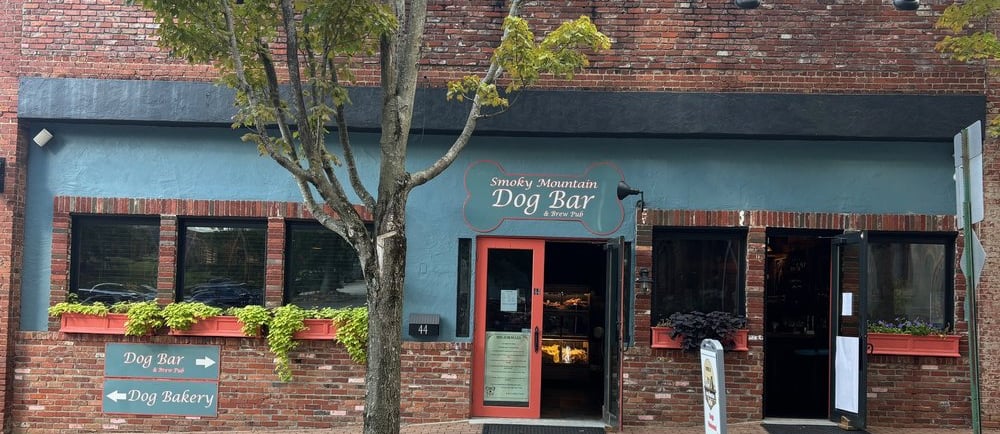
Join us at Smoky Mountain Dog Bakery (171 Montgomery St., Waynesville, NC) on Friday, December 6th for a special book signing with author Walter A. Cook!
✨ Featured Novel: The Ruff Patch: When a Rescue Dog Becomes a Revolutionary ✨
A heartwarming political comedy about democracy, determination, and dogs who refuse to roll over.
What happens when an eleven-year-old activist, a pack of traumatized rescue dogs, and a small Ohio town collide with corporate greed? Democracy gets messy—and hilarious. With unforgettable characters like Franklin the Rottweiler, Cooper the PTSD-afflicted police dog, and Mikey Cook, a young activist learning the ropes of grassroots organizing, this feel-good satire proves that ordinary people (and pets) can spark extraordinary change.
📖 Perfect for readers who love:
• Underdog stories with actual underdogs
• Political satire that’s funny and insightful
• Small-town activism against corporate gentrification
• Found family tales featuring humans and animals
• Heartwarming stories of healing through community
🐶 Event Details:
📍 Smoky Mountain Dog Bakery – Visit Website
📅 Friday, December 6th
📚 Meet Walter A. Cook, get your copy signed, and enjoy treats from the bakery!
🔗 Learn more about the author: WalterCookAuthor.com
📖 Grab your copy online: Amazon Author Page
🐾 Follow on Facebook: Walter A. Cook
🎉 Don’t miss this chance to celebrate community, courage, and the dogs who remind us that democracy works best when everyone has a voice—regardless of species!
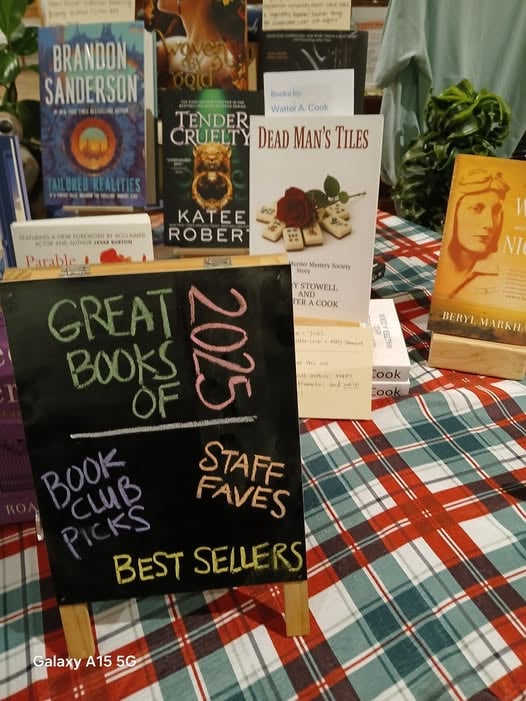
It is always cool to walk into a bookstore and see your book stacked up on a table in the front of the store. Thank you, A Novel Escape Bookstore.
Where do you write?
My characters are often quirky locals.